🎭 Phishing Exposé
Prime Market Darknet — The Phishing Problem
Phishing is the single biggest threat to darknet market users. Not law enforcement, not exit scams — phishing. The mechanics are simple: someone creates a near-perfect copy of Prime Market's login page at a slightly different onion URL, and users who don't verify every character hand over their credentials willingly. The phishing site operators then log into the real market and drain wallets.
This page exists to train your eye. Below you'll find side-by-side comparisons of real vs. fake URLs, explanations of common phishing techniques, and a gamified quiz to test your fake-spotting skills. If you can't score 100% on the quiz below, you're not ready to use any darknet market safely.
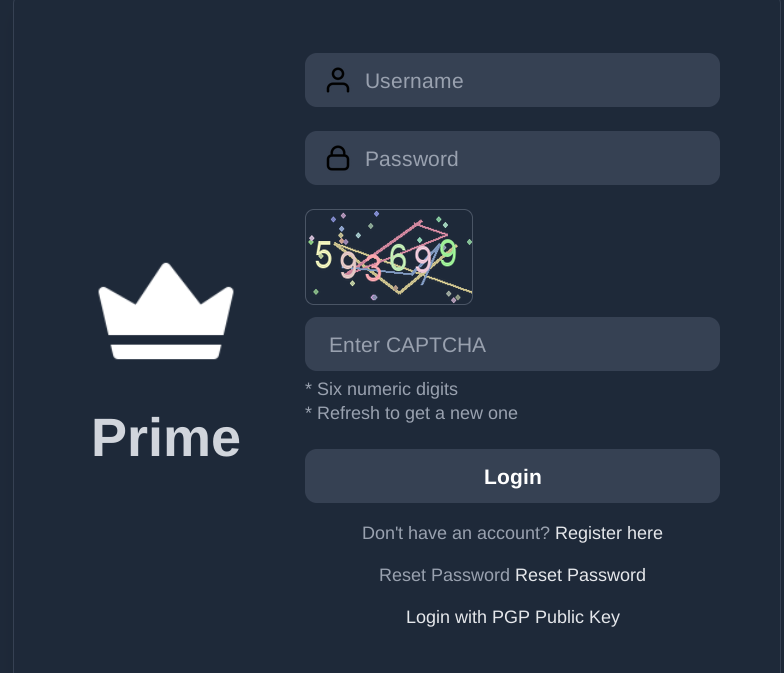
Prime Market Tor — Side-by-Side URL Comparisons
The 6th character is 'a' in the real URL and 'e' in the fake. A single letter — nearly invisible at a glance. This is the most common phishing technique.
Characters 'lt' are swapped to 'tl'. Your brain auto-corrects this when reading quickly — which is exactly what phishers count on.
The Latin 'o' is replaced with Greek 'ο' (omicron). Visually identical in most fonts, but they're different Unicode characters pointing to different .onion addresses.
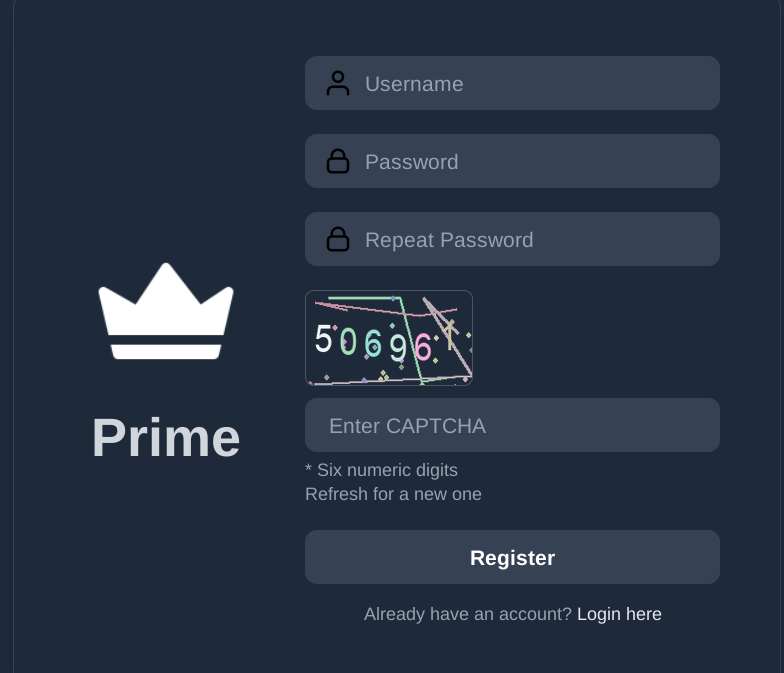
Prime Market Link — Spot-the-Fake Quiz
Below are 4 URLs. For each, decide if it's the REAL Prime Market URL or a FAKE. Click your answer to reveal the truth.
Prime Market Onion — How to Protect Yourself
| Technique | Description | Defense |
|---|---|---|
| Character Substitution | One letter changed (a→e, l→1, o→0) | Character-by-character comparison |
| Transposition | Adjacent characters swapped | Read URL backwards as additional check |
| Unicode Lookalikes | Visually identical chars from different alphabets | Copy-paste from verified source only |
| Subdomain Tricks | Real domain embedded in fake subdomain | Check the actual .onion domain, not subdirectories |
| Mnemonic Harvesting | Fake recovery page asks for seed phrase | Real Prime Market never asks for mnemonic at login |

The Golden Rules
1. Never click a darknet market link from a DM, email, or unverified source. 2. Always copy-paste the URL from a verified page (like this one). 3. Verify character-by-character before entering credentials. 4. If a page asks for your mnemonic key, seed phrase, or PGP private key at login — close it immediately. 5. Cross-reference with at least two independent verified sources before trusting any URL.
Phishing awareness isn't a one-time lesson — it's an ongoing practice. The techniques evolve, the fake sites get better, and complacency is the attacker's best friend. Bookmark this page. Revisit it before every session. Your funds depend on it. Start from the beginning with the URL Adventure, or run diagnostics at the URL Clinic.